Warehouse Racking Repair vs Replacement Singapore Guide
May 29, 2026
Standard storage rack sizes in Singapore exist for a reason. Bay widths, depths, and heights are sized against the pallets used, the forklifts moving them, and the buildings that house them. This blog will walk you through the storage rack sizes Singapore SME and industrial buyers should know, with the bay, depth, and height specs that apply across warehouse racking systems installations.
How storage rack sizing actually works
Rack sizing is driven by three inputs in order: the pallet, the forklift, and the building. Pallet size sets beam length and rack depth. Forklift type sets aisle width and maximum lift height. The building sets ceiling clearance, slab strength, and any mezzanine constraints.
Most Singapore buyers default to industry-standard sizes because the cost of custom dimensions outweighs any benefit. Standard sizes also keep replacement parts easy to source. A bay built to 2,700 mm wide using 1,100 mm deep frames is supportable five years from now from any major supplier. A bay built to non-standard 2,450 mm width is not.
Standard bay widths in Singapore
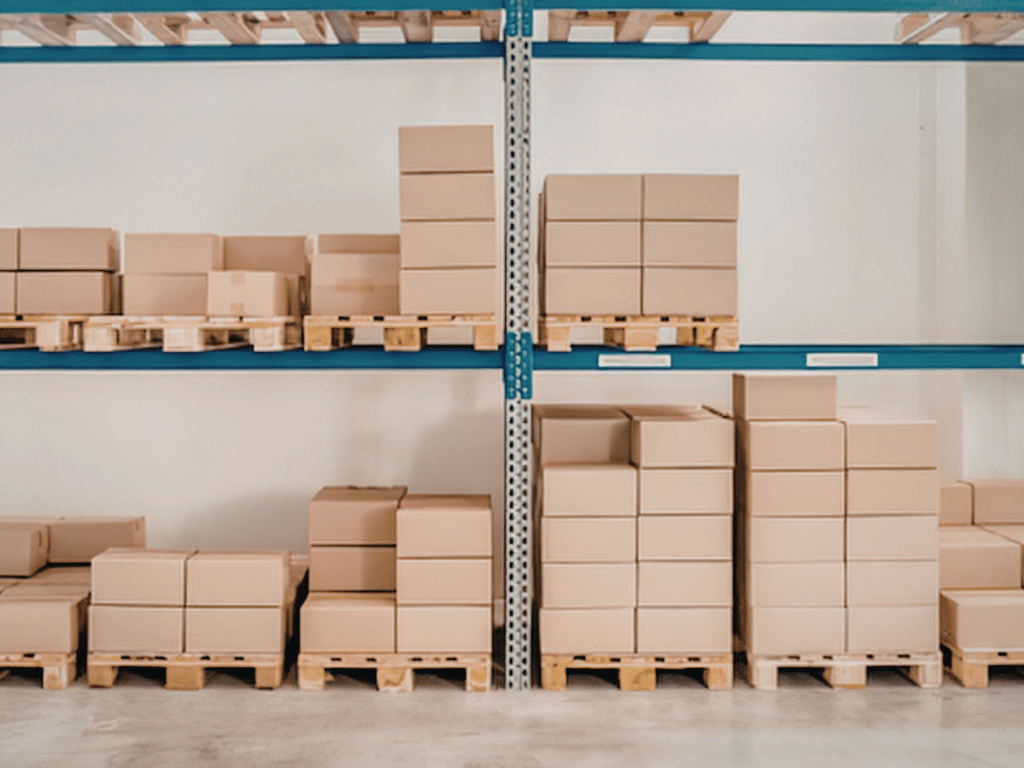
Bay width is the clear opening between two upright frames. It decides how many pallets fit per beam level.
1,800 mm bay holds two standard pallets at 1,000 mm width each, with 400 mm split between pallet clearance and beam end connectors. Used in small SME warehouses, narrow rooms, and back-of-house storage.
2,700 mm bay holds three standard pallets at 1,000 mm width, with 700 mm split across clearances. This is the Singapore default for selective pallet racking and the most common bay width across pallet racking systems installations.
3,600 mm bay holds four pallets per beam level. Used in higher-density layouts where the longer beam can still meet load ratings. The trade-off is beam deflection. Longer beams sag more under the same total load.
A few less common widths exist for specific pallet types. 2,300 mm fits two EUR pallets at 1,200 mm width plus clearance. 3,200 mm fits three EUR pallets. The choice depends entirely on which pallet the operation actually moves through the racks. Mixed pallet fleets are common in Singapore, so a 2,700 mm bay sized for three 1,000 mm pallets is the safer default unless the SKU profile is uniformly EUR.
The rule operators learn fast is that longer bays look efficient on paper but raise beam load ratings and price significantly. A 2,700 mm beam pair rated 3,000 kg UDL costs less than a 3,600 mm beam pair rated the same, because the longer beam needs a heavier profile to meet the rating.
Standard rack depths
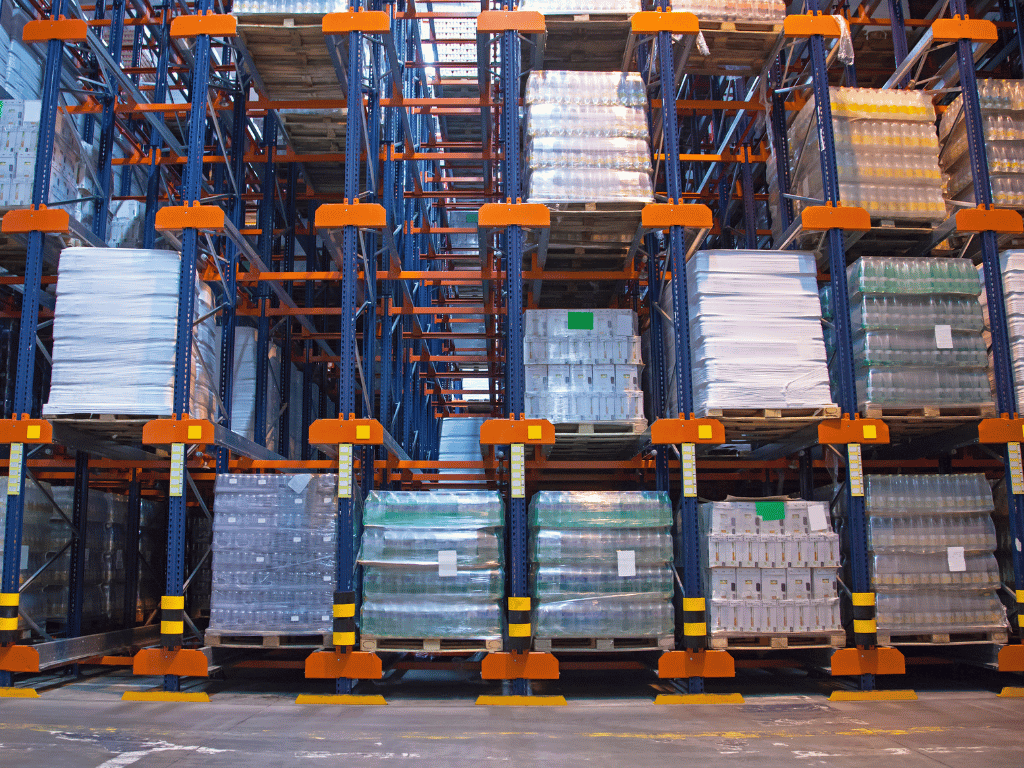
Rack depth is the front-to-back dimension of the upright frame. It is sized to the pallet depth plus roughly 50 mm of overhang on each side, or zero for very tight spec.
600 mm depth is the boltless shelving and light-duty hand-loaded range. Used for files, cartons, and small parts in stockrooms. The 600 mm size matches standard carton depths and is the most common spec across boltless shelving applications in SME stockrooms.
800 mm depth appears in longspan installations and lighter pallet racking. Used for medium-duty hand-loaded inventory and pallets stored stringer-in (1,000 mm leading edge).
900 mm depth is the standard for pallet racking holding 1,000 mm deep pallets. The pallet sits with roughly 50 mm of overhang at the front and back, which is the industry-accepted clearance for safe load.
1,100 mm depth is the Singapore default for selective pallet racking, sized for 1,200 mm deep pallets stored with the long edge facing the aisle (stringer-out). This is the dominant configuration across NTL Storage projects because it matches the 1,000 x 1,200 mm pallet used across Singapore industrial supply chains.
1,200 mm depth is used for heavy-duty installations where the 1,200 mm pallet sits flush with the upright with no overhang allowance. Less common in practice because some overhang is part of safe loading discipline.
Standard heights and ceiling clearance
Rack heights in Singapore typically run 2,400 mm to 6,000 mm for standard installations, with taller VNA systems reaching 8,000 mm to 12,000 mm.
2,400 mm height is the practical maximum for boltless shelving and hand-loaded operations. Stacking higher without forklift access raises manual handling risk.
3,000 mm height is the typical maximum for longspan shelving system installations. Pickers can still reach the top shelf with a small step or low platform.
3,600 mm height suits pallet racking with three pallet levels above the ground level, operated by reach truck or counterbalance forklift. Common in older Singapore industrial units with 5 m clear ceilings.
6,000 mm height is the standard for reach truck operations in modern JTC industrial estates. Pallet racking runs five to six pallet levels at 1,000 mm pitch between beam levels.
8,000 mm and above requires VNA systems, turret trucks, or man-up order pickers. Common in dedicated logistics warehouses with high-bay buildings.
Ceiling clearance is the constraint that catches operators out. JTC industrial units typically run 5 m to 8 m of clear ceiling height for B1 and B2 industrial categories, published in the JTC industrial property guidelines. The top of the highest pallet must clear the ceiling sprinklers by at least 450 mm under the SCDF fire safety code, which often drops effective rack height by 600 mm to 1,000 mm against the raw ceiling number.
Pallet sizes that drive everything
The pallet dictates every rack dimension that follows. Singapore industrial operations run on a small number of standard pallets.
1,200 x 1,000 mm (ISO 1) is the dominant Singapore pallet. Used across general industrial supply chains, FMCG, and most warehousing. Pallet racking depths of 1,100 mm and bay widths of 2,700 mm are sized around this pallet.
1,100 x 1,100 mm (ISO 4 / Asian pallet) is the second most common. Used in regional logistics and trade with Japan, China, and Korea. The square footprint fits the same 1,100 mm rack depth and 2,700 mm bay as the ISO 1 pallet.
1,200 x 800 mm (EUR / EPAL) is used in trade with European partners. The 800 mm deep pallet usually sits stringer-out for safe loading, which gives a 1,200 mm leading edge. Bay widths of 2,300 mm or 3,200 mm match two and three EUR pallets respectively.
1,219 x 1,016 mm (GMA pallet) is used in trade with US partners. Nominally the 48 x 40 inch pallet. The dimensions fit a 1,100 mm rack depth with marginal clearance.
Operations running mixed pallet fleets should spec rack depth to the largest pallet in use. A warehouse running ISO 1 and EUR pallets together should use 1,100 mm depth rack to fit both safely, with the EUR pallet stored stringer-out.
How to spec rack sizes against your building
Five inputs decide the final rack dimensions on the drawing.
Building clear height
Measure from finished floor to the underside of the lowest obstruction (sprinkler heads, beams, conduits, ducting). Subtract the required sprinkler clearance to get the effective rack height envelope.
Slab capacity
Confirm the slab is rated for the planned point load through the baseplates. Older JTC industrial units may have thinner slabs than modern facilities, and a rack designed for the wrong slab will crack the floor or fail anchor pullout tests at handover.
Pallet type and weight
Document the worst-case pallet size and weight that will see the racks. This sets beam length, beam load rating, and rack depth in one calculation.
Forklift fleet
Reach trucks need 2.6 m to 2.9 m aisles, counterbalance forklifts need 3.2 m to 3.5 m, and VNA turret trucks operate in 1.5 m to 1.8 m. The aisle requirement directly affects how many bays of standard width fit in the building.
SKU profile and picking method
High-SKU operations with hand picking favour narrower bays at lower heights for picker access. Bulk pallet flow favours longer bays and taller racks with reach truck access.
Specifying the right size, not the biggest one
Standard storage rack sizes in Singapore exist because they match standard pallets and standard buildings. A 2,700 mm bay, 1,100 mm depth, and 6,000 mm height covers the bulk of selective pallet racking installations in JTC industrial estates because each dimension fits the dominant pallet, slab, and ceiling profile. Deviating from these defaults costs more steel, longer lead time, and harder replacement five years on.
If you are planning a fit-out and need rack sizes confirmed against your building, pallets, and forklift fleet, NTL Storage can survey the site and draw the layout against the standard dimensions before any steel is ordered.
Talk to NTL Storage about rack size planning.
Frequently Asked Questions
What is the standard size of a pallet rack in Singapore?
The most common Singapore selective pallet rack bay is 2,700 mm wide, 1,100 mm deep, and 6,000 mm tall, sized for three 1,000 x 1,200 mm pallets per beam level across five or six pallet levels. Bay widths of 1,800 mm and 3,600 mm are also standard. Total rack height depends on building ceiling clearance and sprinkler position.
How wide is a standard rack bay?
Standard bay widths in Singapore are 1,800 mm (two pallets), 2,700 mm (three pallets), and 3,600 mm (four pallets) for ISO 1 pallets at 1,000 mm width. EUR pallet operations use 2,300 mm (two pallets) or 3,200 mm (three pallets). The 2,700 mm bay is the Singapore default across most warehousing.
What depth pallet rack do I need for a 1,200 x 1,000 pallet?
A 1,200 x 1,000 mm pallet stored stringer-out (1,200 mm leading edge) needs a 1,100 mm deep rack, which gives roughly 50 mm of overhang at the front and back. Stored stringer-in (1,000 mm leading edge), the pallet fits a 900 mm deep rack. The 1,100 mm depth is the Singapore default for mixed pallet operations.
What’s the maximum height for pallet racking in Singapore?
Maximum pallet racking height depends on forklift type and building ceiling. Reach trucks reach 6,000 mm to 8,000 mm. VNA turret trucks reach 12,000 mm or higher. Ceiling clearance must allow 450 mm minimum between the top of stored goods and sprinkler heads under SCDF fire code requirements, which often limits effective rack height by 600 to 1,000 mm.
How is rack depth different from bay width?
Bay width is the horizontal opening between two upright frames, measured along the aisle face. It decides how many pallets fit per beam level. Rack depth is the front-to-back dimension of the upright frame itself, measured perpendicular to the aisle. It decides what pallet depth the rack can hold safely with proper overhang clearance.