Cantilever Racking Specifications: Arms, Columns, Bases
May 29, 2026
Damaged racking in a Singapore warehouse rarely fails on the day of impact. It fails weeks later under a full pallet load, after the dent was logged and ignored. This blog will walk you through warehouse racking repair vs replacement Singapore decisions, the damage classifications that drive them, and the specific cases where a repair holds versus where the upright has to come out.
How damage classification decides the repair-or-replace question
Before any quote for repair, the damaged warehouse racking system needs a category. Singapore warehouses that follow SS EN 15635 use the SEMA traffic light system: green, amber, and red. The classification sits at the centre of the decision because it sets the timeline, the load status, and whether the rack can stay in service at all. The SEMA Codes of Practice define each category and the actions required.
The classification is not subjective. A SEMA Approved Racking Inspector (SARI), or in Singapore a competent equivalent, measures deflection at the point of damage, compares it against tolerance tables in EN 15635, and tags the bay accordingly. A weekly walk-through by your Person Responsible for Racking Safety (PRRS) captures fresh damage between formal inspections. NTL Storage walks operators through the full process in its rack inspection guide for Singapore warehouses.
Green: monitor at next inspection
Green damage sits within the tolerances published in EN 15635. A 3mm scuff on a beam, a paint scrape on an upright corner, slight surface rust on a baseplate edge. The rack stays loaded. The PRRS logs the location and re-checks at the next monthly internal audit. If the same component picks up further damage, it gets reclassified as amber.
Amber: offload, repair within 4 weeks
Amber damage exceeds tolerance but stays under twice the published limit. A typical example is an upright with 4mm horizontal deflection across the bottom 1m, measured against a straight edge. The bay must be offloaded as soon as practical and not refilled until the rack is fixed. UK guidance from the Health and Safety Executive states that where damage affects safety, the racking should be offloaded and controls introduced until remedial work is done. If no remedial work happens within 4 weeks, the damage is reclassified as red and the area is locked out.
Red: immediate offload
Red damage is severe enough to threaten structural integrity. A bent column at the loaded section, a beam pulled off its connector, a torn baseplate weld, or a dislodged anchor bolt with visible movement. The bay is offloaded immediately, fenced off, and not used until either the damaged member is replaced or the engineer confirms repair is acceptable. Red damage is not a discussion. It is a stop-work flag.
When warehouse racking can be repaired
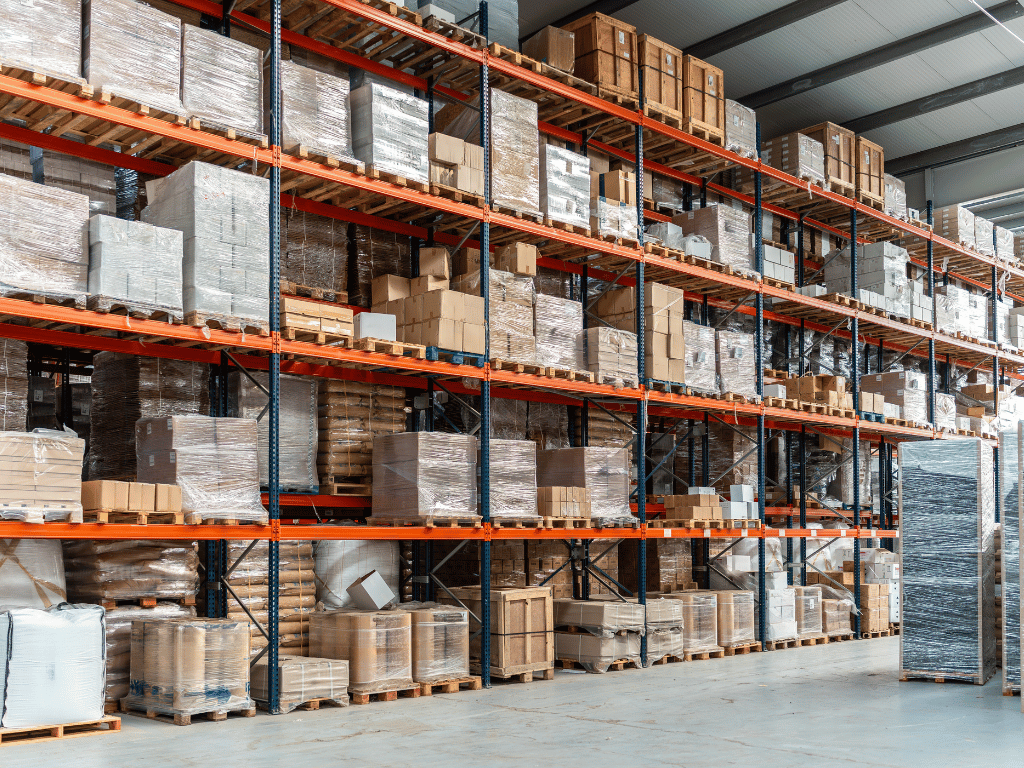
Repair is appropriate when the damage is localised, the residual capacity of the surrounding structure is intact, and the component to be fixed is not a primary load-bearing upright at its lowest section. The following scenarios are routine repair candidates in Singapore warehouses.
Lacing brace damage from forklift impact
Diagonal and horizontal lacing braces connect the two columns of an upright frame and stabilise the rack against lateral loads. When a forklift catches a brace, the steel deforms or the bolt connection shears. The two columns themselves often stay straight. Replacement of the affected brace section, bolted into existing fixing holes, returns the frame to its rated capacity. NTL Storage handles these brace-only swaps without offloading the entire rack run if the damage is isolated to a single bay. The function of each rack component explains why bracing is treated differently from uprights.
Minor upright deflection within tolerance
A column with under 3mm deflection measured over the bottom 1m sits at the boundary of green and amber. If the deflection has not progressed across two consecutive inspections, the upright can be reinforced with a bolt-on rack reinforcement kit. The kit is a vertical steel sleeve that wraps the damaged section and is anchored through the existing baseplate. Capacity is reinstated, the column does not need to come out, and downtime is limited to a few hours per frame.
Loose baseplate fixings
Anchor bolts loosen from vibration, shrinkage of the concrete floor, or repeated forklift impact at the base. If the baseplate itself is undamaged and the column above is plumb, the fix is straightforward: drill a new fixing point, install a fresh expansion anchor, and torque to the specified value. The bay can usually stay loaded during the work if the engineer confirms the existing anchors hold their stated capacity, which depends on the pallet racking load capacity calculation for that location.
Beam dents without permanent deflection
A surface dent on a horizontal beam, with no measurable sag under a calibrated test load, does not change the beam’s rated capacity. The component is logged as green and stays in service. If the dent is on the top flange where the pallet sits, the beam is rotated 180 degrees at the next planned downtime to keep the impacted surface clear of the pallet load path.
When warehouse racking must be replaced
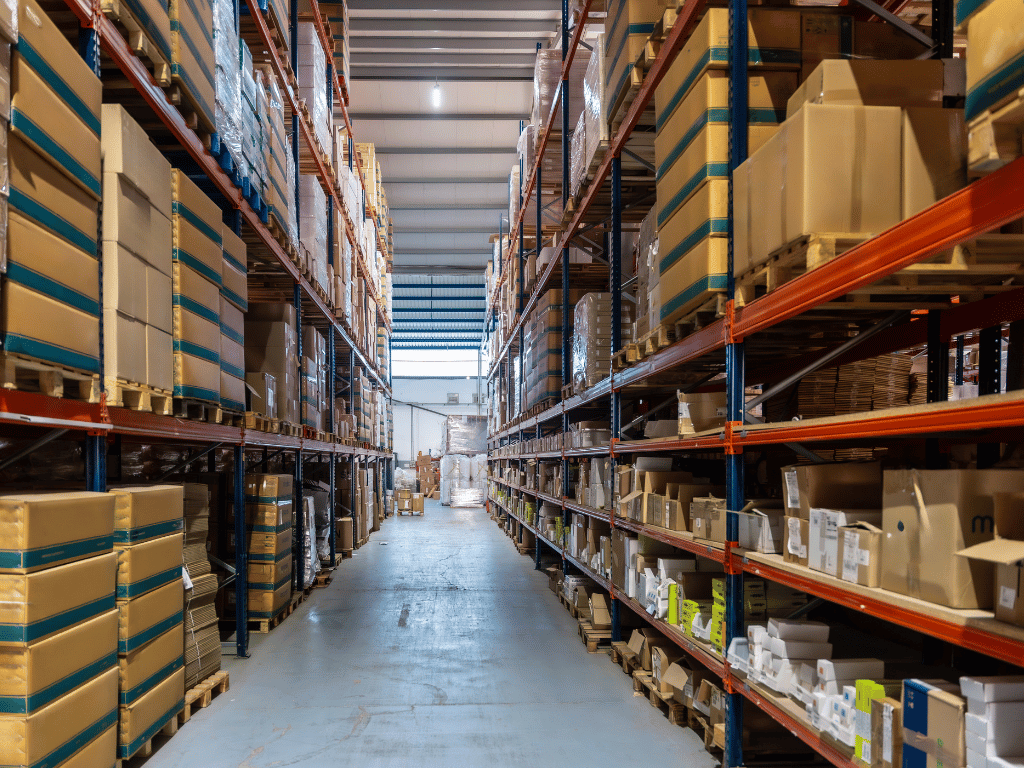
Replacement is the right call when the damage compromises the load path itself, when multiple components in the same frame are damaged, or when EN 15635 tolerances are exceeded by more than twice the published limit. The relevant standard, BS EN 15635:2008 on application and maintenance of steel static storage systems, sets the thresholds Singapore inspectors apply.
Bent column at the loaded section
A bent upright in the lower 1m, the section that carries the highest cumulative load, cannot be reliably reinforced. Once a column deflects past 5mm over 1m at the base, the residual capacity calculation drops below the safe working load for a standard 2.5T pallet. The upright frame is offloaded, the column is replaced, and the new section is bolted or pinned to the original frame depending on the manufacturer’s specification.
Beams with permanent deflection past tolerance
EN 15635 sets beam deflection tolerance at 1/200 of span under full load. A 2.7m beam should not sag more than 13.5mm under its rated load. Permanent deflection, defined as sag that does not recover when the load is removed, means the beam has yielded. Reinforcement kits do not restore yielded steel. The beam comes out.
Cracked welds and torn baseplates
A cracked weld at the column-to-baseplate junction is a structural failure mode that cannot be repaired by re-welding on site. SEMA explicitly advises against welded repairs to damaged rack components because welding alters the heat treatment of the cold-formed steel and the new capacity cannot be verified without lab testing. The frame is offloaded and the upright is replaced with a manufacturer-supplied section. Torn baseplates are treated the same way.
Multiple damaged components in the same frame
When two or more components on the same upright frame are damaged, a bent column plus a deformed lacing brace, or two columns in the same frame both showing amber-level deflection, partial repair leaves residual stress in the remaining structure. Full upright frame replacement is the safer path and usually the lower-cost option across the asset’s remaining service life.
Rack column replacement vs full upright frame swap
Column replacement and frame replacement sit on different sides of the cost ladder. The choice depends on the manufacturer’s design, the damage location, and the warehouse downtime tolerance.
A rack column replacement involves cutting the damaged section out of an existing upright frame and bolting in a manufacturer-supplied replacement piece. The lacing braces and the other column stay in place. This works on bolt-together rack systems where the column is a discrete component. On welded frames, column-only replacement is not possible because the lacing is welded to the column itself.
A full upright frame swap removes both columns and all lacing as one assembly. Surrounding beams are unloaded and lifted off, the damaged frame is unbolted from the floor, and a new frame is installed and re-anchored. The beams are re-fitted and the bay is reloaded. Frame swaps usually take 4 to 8 hours per frame for a standard selective rack, depending on the height and the number of beam levels.
The deciding factor is what the rack manufacturer supplies as a replacement part. Some Singapore-installed systems no longer have matching column parts available because the original manufacturer has discontinued the profile or exited the market. In those cases, frame replacement is the only path. Choosing the right contractor matters here, which is why operators should run the right questions past any racking contractor before signing off on a repair scope.
Post protector retrofit and other protective upgrades
Repair without protection upgrades is short-sighted. The same forklift that bent the column will hit it again unless something changes at floor level. Post protectors and run-end protectors are the standard retrofits after a column repair or replacement, and most operators bundle them into the same scope of work.
A post protector is a steel or polymer sleeve bolted to the floor at the base of an upright. It absorbs the forklift’s impact energy before the steel column takes the hit. A 400Nm-rated post protector typically reduces the impact transferred to the column by 70 to 80 percent in a standard forklift strike at low speed. The protector is sacrificial, it deforms and is replaced. The column stays straight.
Run-end protectors do the same job at the open end of a rack run, where the corner column is most exposed to forklift traffic from the cross-aisle. A run-end protector is heavier than a single post protector, usually a U-shaped frame anchored at two points to spread the impact load. Both protector types are covered in NTL Storage’s racking accessories range.
Retrofit cost in Singapore for a 400Nm post protector runs between SGD 80 and SGD 150 per upright installed. The cost of one column replacement starts around SGD 250 to SGD 450 including labour and reinstallation, before counting the offload and reload time. Protectors pay for themselves after preventing two strikes at the same column.
How to decide: a working framework
The repair-or-replace decision comes down to four questions, in this order:
- What is the SEMA risk category for the damage: green, amber, or red?
- Is the damage on a primary load-bearing column at its loaded section, or on a brace, beam, or accessory?
- Are matching replacement parts available from the original manufacturer?
- What is the total cost of repair plus protection upgrade versus replacement plus protection upgrade across the rack’s remaining service life?
Green damage with no progression: monitor. Amber damage on braces or beams: repair within 4 weeks. Amber damage on uprights: reinforcement kit if deflection is stable and parts are compatible, replacement if not. Red damage on any structural member: replace, then upgrade impact protection at the same location.
The framework holds for both light-duty shelving and heavy-duty pallet racks. The thresholds differ, the logic does not.
Conclusion
Repair makes sense when the damage is localised, the rest of the frame is sound, and matching parts are available. Replacement is non-negotiable when an upright has yielded, welds have cracked, or multiple members in the same frame are damaged. The cheapest fix in the short term is rarely the cheapest fix across the rack’s full service life, especially when no impact protection is added at the same time.
Book a SEMA-aligned inspection with NTL Storage’s racking team to get every bay tagged green, amber, or red before the next forklift shift starts.
FAQ About Warehouse Racking Repair vs Replacement Singapore
Can a bent rack column be repaired in Singapore?
A bent rack column can sometimes be repaired with a bolt-on rack reinforcement kit if deflection is under 3mm over 1m and has not progressed across two consecutive inspections. Above that threshold, EN 15635 requires column replacement. A SEMA-aligned inspector assesses each column individually against the published tolerances before quoting any repair.
How often must warehouse racking be inspected in Singapore?
EN 15635 requires an annual expert racking inspection by a competent inspector, supported by weekly internal checks logged by the warehouse’s Person Responsible for Racking Safety. High-traffic or 24/7 operations should move to 6-monthly expert inspections. Damage logs must be retained for audit.
What is the SEMA traffic light system for damaged racking?
SEMA classifies damage as green (monitor at next inspection), amber (offload and repair within 4 weeks), or red (immediate offload). The categories drive every repair-or-replace decision and are referenced in HSE HSG76 and EN 15635. A SEMA Approved Racking Inspector assigns the rating during the formal annual inspection.
Are post protectors worth the cost in a busy warehouse?
Yes, in any aisle with regular forklift traffic. A 400Nm post protector absorbs 70 to 80 percent of impact energy before it reaches the column. Retrofit cost is SGD 80 to SGD 150 per upright, lower than one column replacement at SGD 250 to SGD 450, and it prevents recurring damage at the same location.
Can welded repair fix a damaged rack upright?
SEMA explicitly advises against on-site welded repairs to damaged uprights. Welding alters the heat treatment of cold-formed steel and changes the load capacity in ways that cannot be verified without lab testing. Bolt-on reinforcement kits or full component replacement are the only compliant options under EN 15635.