Boltless Rack vs Boltless Shelving: Are They the Same?
May 28, 2026
Warehouse Racking Repair vs Replacement Singapore Guide
May 29, 2026
Cantilever racking holds the pipes, lumber, steel bars, and sheet goods that pallet racking cannot. Choosing the right cantilever racking specifications starts with three numbers: arm capacity, column height, and base plate size. This blog will walk you through how each spec is calculated, how the numbers interact under load, and what a complete cantilever racking system quote should show.
What every cantilever rack spec actually tells you
A cantilever rack is rated against four interacting numbers: load per arm, total column capacity, base plate footprint, and anchor uplift. Each number depends on the others. An arm rated 1,000 kg means nothing if the column underneath cannot carry the cumulative load of all arms at full capacity, or if the base plate is too small for the moment created by a loaded arm.
The structure transfers horizontal load from the arms down the column to the base, where the base plate and anchors resist both downward force and the forward tilt (moment) created by the loaded arm. A buyer reading a cantilever quote should look at every one of those numbers, not just arm capacity.
Across the warehouse racking systems catalogue, cantilever is one of the few configurations where the headline number (arm capacity) is the most often misread. The single biggest mistake in cantilever specification is over-trusting the arm rating and under-checking the column and base.
Arm length and capacity
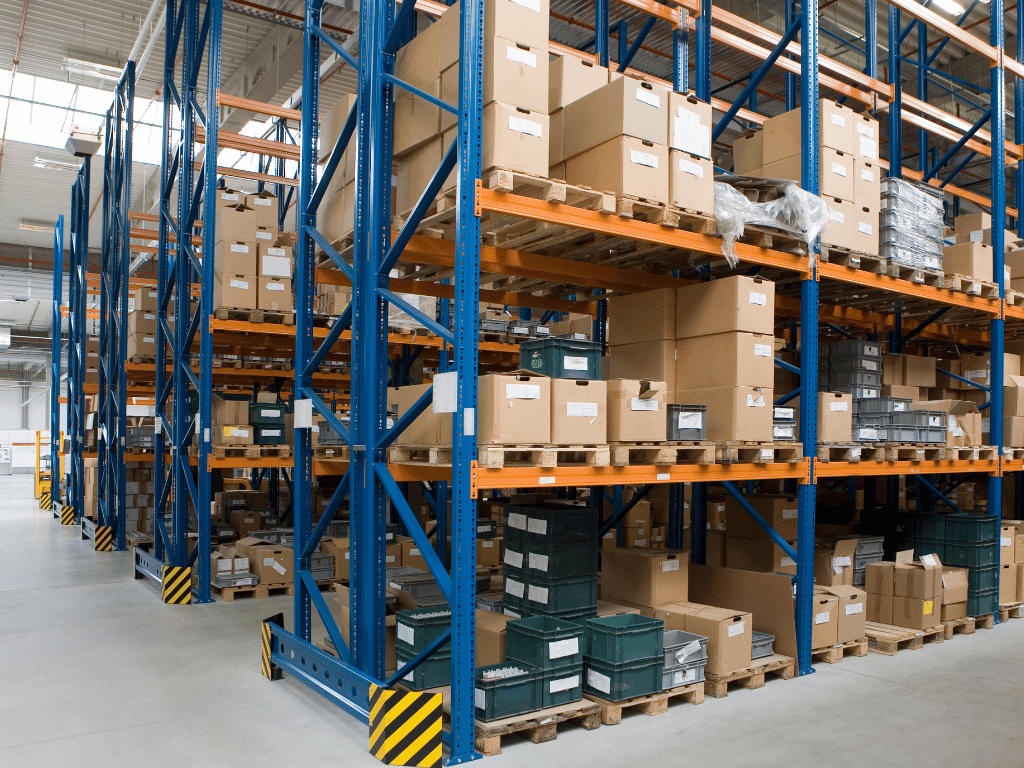
Standard arm lengths
Cantilever arms come in fixed length increments across most Singapore suppliers: 600 mm, 750 mm, 900 mm, 1,000 mm, 1,200 mm, 1,500 mm, and 1,800 mm. The 600 mm, 900 mm, and 1,200 mm sizes cover the bulk of SME applications.
The right arm length sits between the half-length of the longest load and a safe overhang allowance. A 6 m steel bar stored on cantilever needs at least two arms underneath, with the bar overhanging each end arm by no more than 25 percent of arm spacing. For pipes and conduit, arm length should match the load support footprint plus 100 mm on each side.
Capacity per arm
Arm capacity is rated against a uniformly distributed load (UDL) across the arm length. Standard ratings run 250 kg, 500 kg, 750 kg, 1,000 kg, 1,500 kg, and 2,000 kg per arm. The rating drops if the load is concentrated at the arm tip rather than distributed across its length.
A 1,000 kg arm rating typically applies to a balanced distributed load. The same arm holding a single 1,000 kg point load at the tip experiences a much higher bending moment and may fail at 700 kg or less. This is the single most common cause of cantilever failure in the field. The cantilever racking guide for pipes, lumber, and steel bars walks through arm sizing against real load profiles.
Arm deflection and load behaviour
Under full UDL, an arm will deflect (sag) at the tip. The accepted industry deflection limit is roughly L/200 of arm length, meaning a 1,200 mm arm should not sag more than 6 mm at the tip under rated load. Anything beyond that signals an underrated arm, a structural defect, or overload. Persistent deflection that does not recover when load is removed means the arm has yielded and should be replaced, not straightened.
Column heights and configurations
Standard column heights and total capacity
Column heights in Singapore cantilever installations typically run 2.0 m, 2.5 m, 3.0 m, 4.0 m, 5.0 m, and 6.0 m. Taller columns up to 8 m exist for custom installations, usually paired with reach trucks or overhead crane loading.
Total column capacity (the sum of all arm loads the column can carry) ranges 3 tonnes to 12 tonnes for standard SME spec. A 3 m column with five arm levels at 500 kg per arm carries 2,500 kg total per face. The column profile, typically 100 x 100 mm to 150 x 150 mm tube or rolled H-section, sets that cap.
Arm pitch and level count
Arm pitch is the vertical spacing between arm levels. Minimum pitch is usually 300 mm to allow load insertion and removal without clipping the arm above. For 200 mm diameter pipes, 400 mm pitch is more practical. The number of arm levels per column depends on column height and load length.
A common SME cantilever spec for steel bar storage uses a 4 m column with five arm levels at 750 mm pitch. That gives storage at 250 mm (lowest arm), 1,000 mm, 1,750 mm, 2,500 mm, and 3,250 mm above the floor.
Single-sided versus double-sided
Single-sided cantilever holds load on one face only. The column has arms on one side and a stabilising back leg, used along walls or in narrow yard layouts.
Double-sided cantilever holds load on both faces. The column has arms on both sides and a symmetric base, doubling storage capacity per linear metre of column footprint. Yard installations for steel stockists and timber suppliers almost always run double-sided, because the floor space saved offsets the higher per-column cost.
Base plates, anchoring, and floor requirements
Base plate dimensions and thickness
The base plate sits between the column and the slab. For single-sided cantilever, the base extends 600 mm to 900 mm forward of the column on the load side, with a shorter back leg of 200 mm to 400 mm. For double-sided cantilever, the base is symmetric, extending 600 mm to 900 mm on each side.
Plate thickness runs 10 mm to 20 mm. The plate has to resist bending under the column’s vertical load and the forward moment from loaded arms. Thinner plates flex and crack the slab around the anchor bolts over time.
Anchor bolts and uplift resistance
Cantilever anchoring is more demanding than pallet rack anchoring because of the forward moment. A loaded arm at the tip creates a forward tilt that pulls the back anchor bolts upward.
Anchor bolts are typically M16 to M24, in 4 to 6 bolts per base depending on column capacity. Chemical anchors are preferred over expansion anchors for cantilever installations above 4 m, because they resist cyclic uplift better. Anchor depth should be at least 8 to 10 times the bolt diameter to develop full pull-out resistance, in line with SEMA’s racking design guidance on cantilever bracing and anchoring. Column protectors and arm stops to prevent round loads from rolling off form part of the racking accessories range and should be specified alongside the main structure, not added later as a retrofit.
Floor slab capacity
Cantilever concentrates load on a small footprint, which raises point pressure on the slab. A loaded six-level double-sided column carrying 6 tonnes total across a 900 mm x 900 mm base plate footprint applies roughly 7.4 tonnes per square metre at the slab surface.
The Singapore design code BC1:2008 from the Building and Construction Authority sets the structural use of steel requirements for buildings and gives the load combinations that the slab below cantilever installations should be designed against. Older JTC industrial units with thinner ground slabs may need slab assessment before tall cantilever can be installed safely.
How to read a cantilever rack quote
A complete cantilever specification on a quote shows seven items: arm length and capacity (with UDL versus point load called out), column height and total capacity, arm pitch and level count, base plate dimensions, anchor bolt spec, single-sided or double-sided configuration, and the design code referenced for structural verification. If any of those is missing, the quote is incomplete.
The fastest way to compare two quotes is to convert both to the same data points: arms per column, kg per arm, total kg per column, and base plate footprint. Two cantilever quotes priced 30 percent apart often reveal the difference in column gauge, base plate thickness, or arm profile when the numbers are laid out side by side.
For projects integrating cantilever with pallet racking in the same warehouse layout, the industrial racking system design guide covers how to draw both onto a single floor plan with consistent aisle widths and clearance allowances.
Specifying cantilever for actual stock, not generic SKUs
A correctly specified cantilever rack matches the stock profile, not a generic catalogue sheet. Arm length is sized against load overhang. Arm capacity is rated against UDL with point load reductions documented. Column height accommodates the stock plus arm pitch margin. Base plate footprint and anchor specification match the forward moment under full load.
If you are scoping a yard installation, factory pipe rack, or steel stockist layout in Singapore, NTL Storage can survey the stock and the slab against the right configuration before any steel is cut.
Talk to NTL Storage about a cantilever racking specification.
Frequently Asked Questions
What is the standard arm length for cantilever racking?
Standard cantilever arm lengths in Singapore are 600 mm, 750 mm, 900 mm, 1,000 mm, 1,200 mm, 1,500 mm, and 1,800 mm. The 600 mm, 900 mm, and 1,200 mm sizes cover most SME applications. Arm length should match roughly half of the longest load with no more than 25 percent overhang at each end arm.
How much weight can a single cantilever arm hold?
Standard cantilever arm capacities range 250 kg to 2,000 kg per arm rated against uniformly distributed load. The same arm holding a concentrated point load at the tip carries roughly 30 to 40 percent less, often 600 to 700 kg on an arm rated 1,000 kg UDL. Always confirm whether the rating is UDL or point load before specifying.
What is the difference between single-sided and double-sided cantilever racking?
Single-sided cantilever holds load on one face only with a stabilising back leg, used along walls and in narrow yards. Double-sided cantilever holds load on both faces with a symmetric base, doubling storage capacity per linear metre of column footprint. Yard installations for steel stockists and timber suppliers typically run double-sided for floor space efficiency.
What size base plate does cantilever racking need?
Base plate size depends on column height, total load, and configuration. Single-sided base plates extend 600 mm to 900 mm forward of the column with a shorter back leg of 200 mm to 400 mm. Double-sided plates are symmetric, extending 600 mm to 900 mm on each side. Plate thickness runs 10 mm to 20 mm depending on moment load.
What anchor bolts are needed for cantilever racking?
Cantilever anchor bolts are typically M16 to M24, in 4 to 6 bolts per base. Chemical anchors are preferred over expansion anchors for installations above 4 m because they resist cyclic uplift from forward moments better. Anchor embedment depth should be at least 8 to 10 times the bolt diameter to develop full pull-out resistance against arm load.