How to Choose Pallet Racking: Singapore Guide 2026
July 3, 2026
Singapore imports more than 90% of its food, and the Health Sciences Authority requires pharma distributors to ship the oldest stock first. Both pressures put a premium on pallet flow racking in Singapore, where gravity enforces rotation that staff cannot skip. This blog walks you through when this first in first out system earns its cost, drawing on the warehouse pallet racking systems NTL Storage designs and installs island wide.
What is pallet flow racking and how does it actually move pallets?
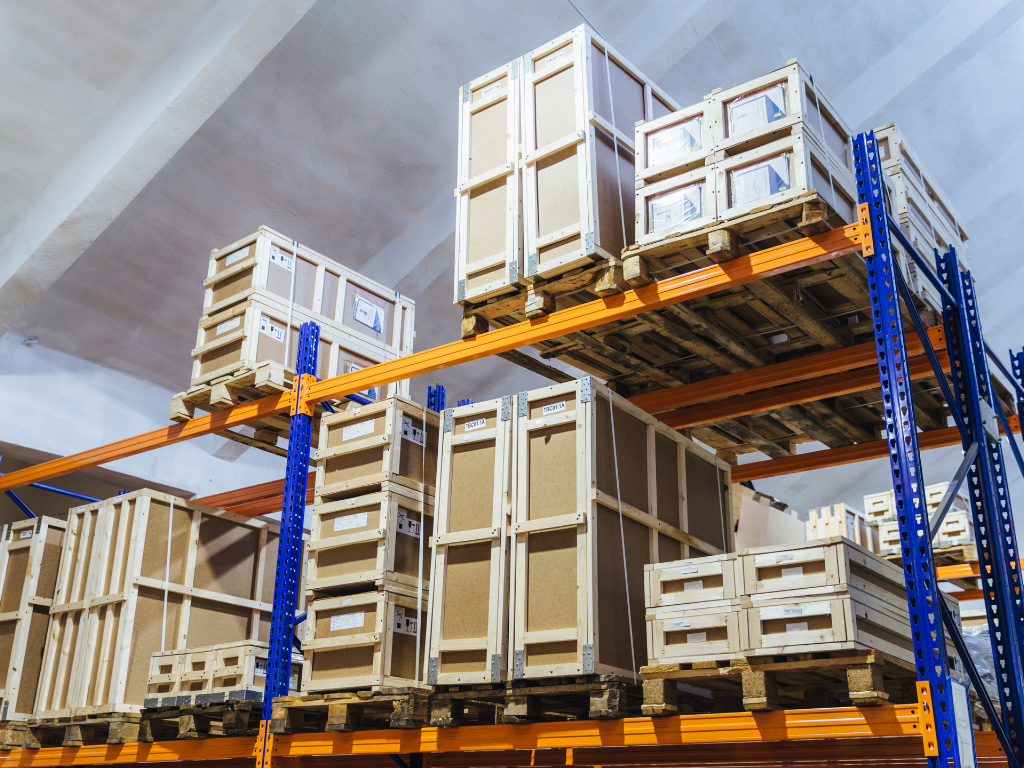
Pallet flow racking is a high density storage system that uses gravity to move pallets along inclined roller lanes from a load face to a pick face, enforcing strict first in first out rotation. A forklift charges full pallets at the high end, and each pallet rolls down to the front as the one ahead is picked. No truck enters the lane.
The mechanics are simple steel and physics. Lanes are pitched at a slight downward gradient, usually around 3 to 4 percent, which is enough to move a loaded pallet but not enough to let it run away. Brake or speed controllers, spaced every four to eight pallet positions, hold the descent to a safe, steady pace, and a pallet stop at the pick face takes the final load. Roller spacing is matched to the pallet, tighter for soft bottom or damaged pallets, wider for standard pallets carrying 500 to 2,000 kilograms a level.
The defining feature is the split between faces. Replenishment happens on one aisle, picking on the other, so the two flows never block each other. That separation is what makes pallet flow racking a genuinely dynamic system rather than a static rack with wheels bolted on.
When does FIFO beat LIFO in a Singapore warehouse?
FIFO beats LIFO whenever your stock has an expiry date, a batch number, or a shelf life that the regulator cares about. If the oldest pallet must leave first, the rack geometry should make that the only option, not a rule staff are asked to remember.
This is not a preference. The Health Sciences Authority’s Good Distribution Practice standards, updated on 15 December 2023, require first expiry first out for therapeutic products that carry expiry dates and first in first out where they do not. Medical device distributors work to SS 620:2016, the Singapore Standard for Good Distribution Practice, which carries the same rotation logic. A rack that physically delivers the oldest pallet to the picker turns a compliance burden into a default.
LIFO still wins for the right stock. Sand, steel coil, packaging consumables and other goods with no expiry tolerate last in, first out happily, and a denser LIFO format saves money there. The cleaner approach is to sort stock by rotation rule first, then assign geometry, rather than buying one system for the whole building. Worth noting: a mixed warehouse often runs pallet flow for the dated lines and a LIFO format such as drive in and drive through racking for the rest.
Pallet flow, drive in or push back: which dense system fits?
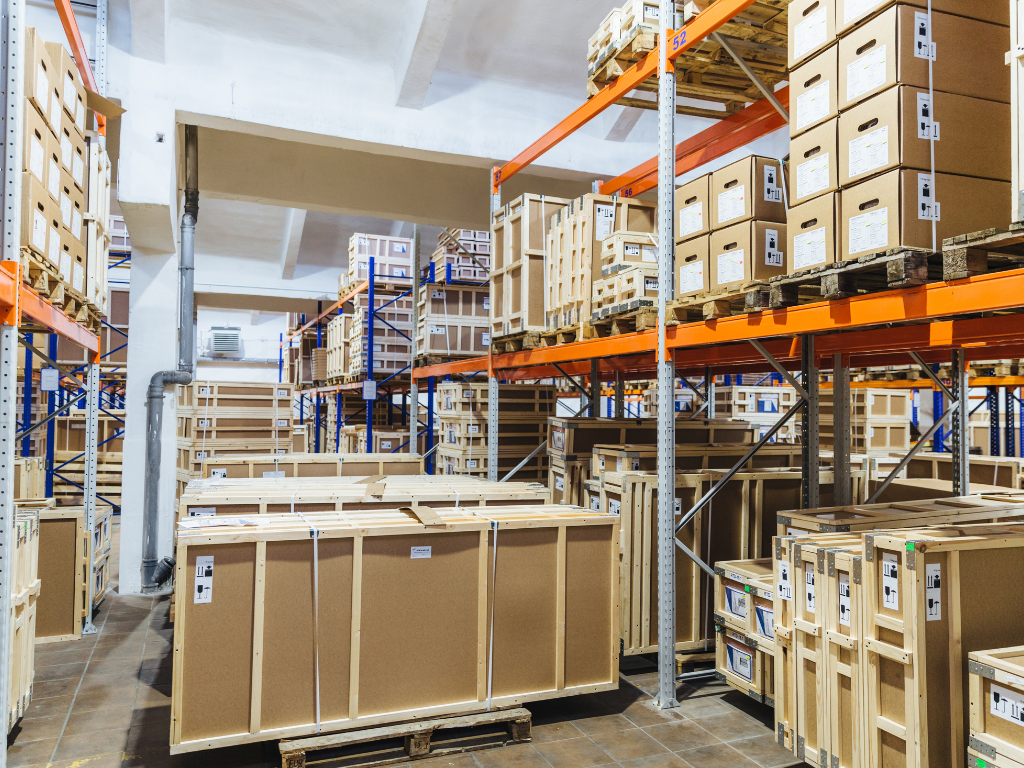
All three pack pallets deep and cut aisles, but only pallet flow and drive through give true FIFO. The table below sets the practical differences for the formats used in Singapore high density storage.
| System | Rotation | Lane depth | Selectivity | Best fit |
| Pallet flow | FIFO | Up to 20+ pallets | One SKU per lane | Expiry dated, high turnover |
| Push back | LIFO | Up to ~4 pallets | One SKU per lane | Bulk, non perishable |
| Drive in | LIFO | Deep block | Low | Few SKUs, maximum density |
| Drive through | FIFO | Deep block | Low | FIFO bulk, separate aisles |
Pallet flow racking holds up to 20 or more pallets per lane and lifts storage capacity by close to 50 percent against standard selective racking, while keeping rotation honest. Push back racking, by contrast, runs on nested carts and tops out near four pallets per lane on a last in, first out basis. Drive in racking gives the deepest block density of any static system but surrenders rotation control, since the same aisle loads and unloads.
The trade is throughput against capital. Pallet flow separates loading from picking, so a high turnover line keeps a full pick face all shift, which push back and drive in cannot match. Where this breaks down is slow stock: paying for rollers and brakes to move a pallet twice a month rarely pays back. For very tall, very dense storage where rotation matters less, operators often pair flow lanes with very narrow aisle racking elsewhere in the same building.
Which Singapore operations get the most out of pallet flow?
Cold chain, food and beverage, and pharma operations get the most from pallet flow, because all three combine dated stock with high turnover. Refrigerated cube is the most expensive space in any Singapore warehouse, so a system that packs pallets deep while feeding a single pick face earns back its cost faster in a freezer than in ambient storage.
The market is moving this way. Two cold chain warehouses completed in the first quarter of 2026, including a food logistics facility at 8 Jalan Besut fitted with a high bay automatic storage and retrieval system and the 400,000 square foot Jurong Logistics Terminal 5, according to CBRE’s commentary on the JTC Q1 2026 statistics. Singapore’s “30 by 30” food security goal and its biomedical export base keep that demand structural rather than seasonal.
Freezer designs use stainless steel rollers and brakes to survive the cold, and they keep forklifts out of the frozen lanes, which cuts both energy loss and accident risk. For temperature sensitive layouts, the coating and aisle decisions matter as much as the rack, which NTL covers in its guide to cold store racking design. A pharma distributor running first expiry first out on vaccines gains the same benefit: the rack itself enforces the batch order an auditor will check.
How much does pallet flow racking cost, and when is it worth it?
Pallet flow racking costs more per pallet position than any static system, because each lane carries rollers, brakes and engineered rails rather than plain beams. It pays back through three levers: higher density, lower labour per pick, and reduced write offs from expired stock.
Run the maths on cube, not on steel. With the JTC All Industrial warehouse segment at 89.4 percent occupancy in the first quarter of 2026 and prime logistics space tighter at 95.8 percent, leasing your way out of a capacity problem is rarely cheap or quick. Catherine He, Head of Research at Colliers Singapore, has pointed to “an average annual supply of 1.1 mil sqm industrial space” arriving from 2024 to 2026, much of it pre committed. The denser your existing cube, the less that supply squeeze costs you.
The honest stance: pallet flow is the wrong buy for slow, low value stock, and the right buy for fast, dated, high value stock where a single expired pallet wipes out the saving from cheaper racking. Where selective racking suits mixed velocity inventory, NTL sets out the boundary in its note on where selective racking fits.
What standards and safety rules apply to pallet flow racking in Singapore?
Three layers apply, and they are not the same as those for selective racking. The structural design code most operators assume covers everything, SS EN 15512, explicitly excludes pallet live storage and push back systems from its scope. Pallet flow is therefore engineered to manufacturer and FEM design references instead, which changes who is qualified to sign off your project.
Safe use still falls under SS EN 15635. That standard requires a Person Responsible for Racking Safety to run weekly visual checks and a competent inspector to carry out a full inspection at least every 12 months, with damage graded on the SEMA traffic light system. On a flow lane, inspection also covers the rollers, brakes and pallet stops that a static rack does not have, since a failed speed controller turns gravity into a hazard.
The third layer is operational compliance. Pharma and medical device operators answer to HSA Good Distribution Practice, and workplace safety sits under the MOM Workplace Safety and Health framework, not any overseas authority. Before committing to a flow design, run through the checks before you appoint a contractor, because a supplier who cannot show flow lane design calculations is selling rollers, not engineering.
The decision in one line
Pallet flow racking earns its place when rotation is a rule you cannot afford to break and turnover is high enough to keep the lanes moving. Match the geometry to the stock, not the stock to the rack, and the expensive cube in a Singapore cold store starts paying for itself.
Bring your SKU list, pallet throughput and temperature requirements to NTL Storage and we will model whether flow lanes, a LIFO format, or a mix returns the most from your floor. Request a racking site survey before any steel is specified.
FAQs About Pallet Flow Racking ingapore
How many pallets deep can a pallet flow lane be?
Pallet flow lanes commonly run from 2 to more than 20 pallets deep, with brake or speed controllers fitted every four to eight positions to hold a safe descent. Lane depth is set by pallet weight, gradient and turnover, so NTL Storage sizes it against your daily throughput rather than a fixed maximum.
Is pallet flow racking good for freezer storage?
Yes. Pallet flow racking suits freezer and chiller storage because it packs the most pallets into expensive refrigerated cube and keeps forklifts out of the cold lanes. Freezer builds use stainless steel rollers and brakes, and the FIFO flow matches the expiry control that food and pharma operators in Singapore must document.
What is the difference between pallet flow and carton flow racking?
Pallet flow racking moves full pallets on inclined roller lanes for forklift handling, while carton flow racking moves individual cases or totes on lighter wheel tracks for hand picking. Both use gravity and FIFO, but carton flow suits split case picking and pallet flow suits whole pallet rotation at 500 to 2,000 kilograms a load.
Does pallet flow racking need a special forklift?
No. Pallet flow racking works with standard reach or counterbalance trucks, unlike very narrow aisle racking, which needs a dedicated guided truck. The forklift only loads from the charge aisle and picks from the discharge aisle, so a flow system needs just one aisle each side rather than an aisle between every rack run.