Steel Service Centre Racking Singapore: Cantilever Guide
June 12, 2026
A boltless rack for auto parts storage is the right answer for most Singapore workshops because the parts are light, the SKU count is wide, and the layout has to change every quarter. This blog will walk you through how to size the shelves, lay out the pick face, and design bin visibility for an auto workshop stockroom that supports faster jobs and fewer wrong-part returns.
Why boltless rack is the default for Singapore auto workshop stockrooms
Singapore has over 1 million registered motor vehicles, with the Land Transport Authority publishing monthly and annual statistics on the vehicle population by type. That installed base sustains a deep network of independent workshops, authorised service centres, and parts distributors, almost all of whom hold a stockroom of 800 to 3,000 SKUs at any given time. The storage system that fits that profile is boltless shelving, not pallet racking and not lockers.
Auto parts have three characteristics that point straight to boltless. Most parts are under 25 kg per piece. The SKU count is wide and changes with every new model year. The stockroom layout has to be adjusted by the workshop team itself, without bringing in a contractor every time. Boltless racks assemble with hooks and connectors, take light to medium duty loads, and let the workshop adjust shelf heights in minutes. The cost per linear metre is the lowest of any compliant shelving option in the Singapore market.
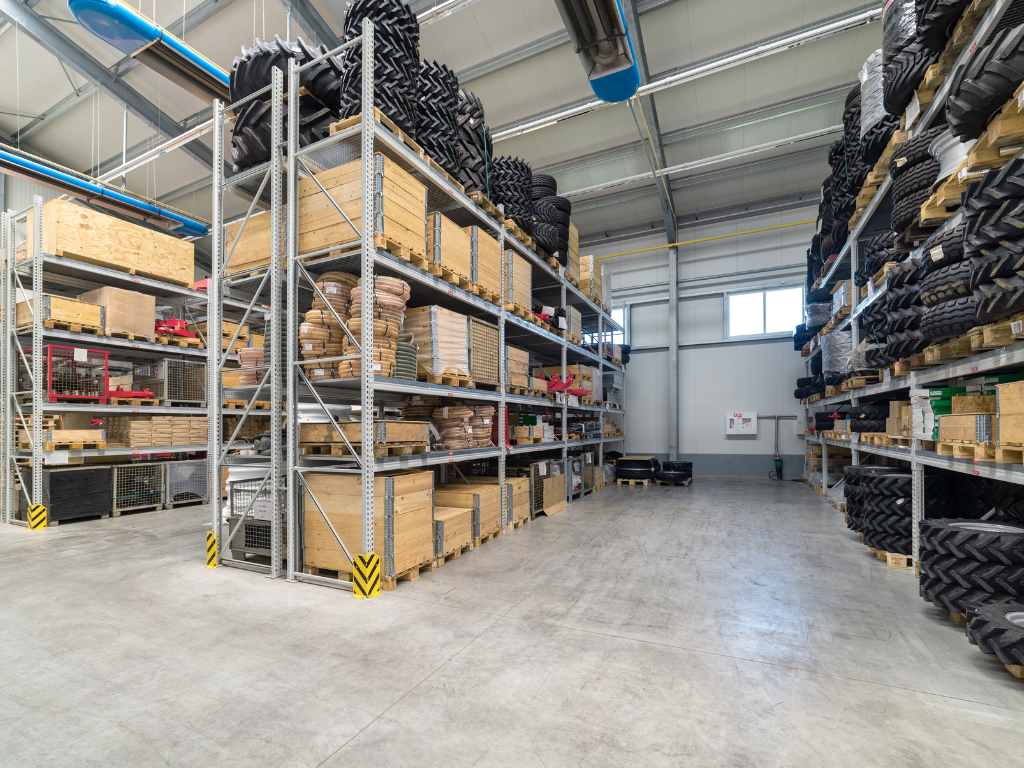
The exception is heavy parts. Alternators, brake discs in bulk, gearbox housings, and tyres stack quickly past the safe load of standard boltless shelves. For those, the workshop steps up to longspan or heavy duty rack in a dedicated zone. The decision framework is unpacked in NTL Storage’s shelving versus longspan versus pallet racking guide, which is worth reading before signing off on any layout.
Shelf loading: what auto parts actually weigh
The single most common mistake in workshop stockroom design is overloading. The shelves look strong, the parts look light, and a 30 kg starter motor lands on a particleboard deck rated for 200 kg uniformly distributed load. That last word matters. The rating is uniform, not point load. A heavy item dropped on one corner can fail a deck that would carry the same weight spread evenly.
Standard particleboard decks in boltless racks supplied in Singapore typically carry 150 to 250 kg per shelf at 900 to 1,200 mm beam span. That covers small parts in bins, blister-packed consumables, filters, gaskets, and most electrical components. A 1,200 mm wide shelf at 200 kg UDL holds roughly 80 to 100 bins of small fasteners and clips with capacity to spare.
Steel deck and reinforced shelves
Steel-decked shelves step the rating up to 300 to 500 kg per shelf at the same span. This is where mid-weight workshop stock lives: brake pads in cartons, suspension bushings, oil filters in boxes of 20, and small alternator units. Steel decks also handle minor oil drips better than particleboard, which matters in a workshop stockroom even with parts that arrive dry.
Where overloading happens
Three places. Top shelves where staff stack overflow without checking the rating. Mid-height shelves used for heavy items because they are at waist level for picking, when the deck is actually only rated for light loads at that bay. And corner shelves at the end of a run where horizontal bracing is weaker than the shelves at the centre of the rack. The fix is a load placard on every bay, matched to the actual configuration, with the safe working load printed in kilograms per shelf.
When to step up from boltless to longspan
Once any single shelf is regularly carrying more than 400 kg, or once stock items routinely exceed 50 kg per piece, the workshop should plan for longspan or heavy duty rack in that zone. NTL Storage’s longspan shelving system carries 500 to 800 kg per beam pair at standard spans, with steel or chipboard decks, and is the natural step up from boltless for heavy parts.

Pick face layout for auto parts
The pick face is where the parts counter staff or the technician actually pulls a part. It is the most worked surface in the stockroom and deserves the most layout attention.
ABC velocity zoning
A typical Singapore workshop sees 20 percent of SKUs generate 80 percent of pulls. Brake pads, engine oil filters, cabin air filters, common spark plugs, and standard wiper blades are the A items. They should sit at waist to shoulder height (between 800 mm and 1,500 mm above floor), in the bays closest to the parts counter or the bay door. B items (medium velocity) move to higher or lower shelves in the same zone. C items (slow movers) move to the back wall or upper levels, accessed by step ladder.
Inventory turnover in a well-run independent workshop runs 4 to 6 times per year for the full stockroom, meaning each part sits for an average of 2 to 3 months before it is used or sold. ABC zoning is what makes that achievable. NTL Storage’s warehouse inventory management guide covers the velocity zoning principles in more detail.
Label-front orientation
Every bin and every boxed part should sit with the label facing the aisle. This is the single cheapest visibility improvement in a workshop stockroom and the one most often skipped. Time spent picking up bins to read the side label, or rotating boxes to find the part number, compounds across a year into days of lost technician time.
Bin label format matters. Most Singapore workshops settle on part number, supplier name or brand, and the make-model fitment range, in that order. A QR code linking to the workshop’s inventory management system is increasingly common, especially in authorised service centres.
Walking-arm reach height
The optimal pick zone is between 750 mm (just above the hip) and 1,650 mm (just above the shoulder for an average-height worker). Shelves below 750 mm require the picker to bend, which slows pulls and increases the chance of mis-picks at the end of a long shift. Shelves above 1,650 mm require a step or stretch and are reserved for slow movers or overstock.
Replenishment from reserve
The pick face holds the working inventory, typically 1 to 2 weeks of stock. Reserve stock for fast movers sits in a separate area, either in upper boltless levels or in a back-of-stockroom longspan bay. Replenishment runs are scheduled weekly, with the stockroom manager pulling from reserve to top up pick face bins. This keeps the pick face tidy and predictable.
Stock visibility: bin design and labelling
Boltless shelving is the platform. The bins are where the actual inventory management discipline happens.
Small parts bins and pegboard
Standard small parts bins in Singapore workshops run in three sizes: 100 mm deep for clips and fasteners, 200 mm deep for small electrical components, and 300 mm deep for filters and light pumps. Bins should sit on rails or grooves cut into the shelf, which keeps them aligned and stops sliding. Bin dividers separate two or three SKUs that share a category, like brake pad sets for adjacent vehicle models.
Blister-packed consumables (fuses, bulbs, wipers, electrical connectors) sit on pegboard mounted to the rear or side of a boltless bay. Pegboard is high-density for small flat packs and lets the picker scan multiple SKUs at once. Most Singapore workshops install one or two pegboard panels per stockroom, each holding 200 to 400 pegs of mixed consumables.
Kanban two-bin system
The two-bin kanban approach works well for high-velocity consumables in auto workshops. Each SKU sits in two adjacent bins on the pick face. When the front bin empties, the picker moves the back bin forward and places the empty bin on a reorder rack. The stockroom manager replenishes the empty bin and slots it back behind the active one. The system is self-policing, requires no inventory app, and catches stockouts before they happen.
FIFO bin rotation for consumables
Engine oil, brake fluid, sealants, and lubricants have shelf lives that matter. FIFO (first in, first out) rotation means newer stock goes behind older stock on the shelf, and the picker always pulls from the front. The bin layout should support this physically by being open at the front and back, or by using gravity-fed flow racks for the highest-velocity consumables. Bay depth of 600 mm with a 100 mm front lip is the standard configuration for FIFO bins in Singapore workshops.
Workshop-specific quirks the standard catalogue does not solve
Three categories of stock need design attention beyond the standard boltless catalogue.
Fluid storage
Engine oil, coolant, brake fluid, and hydraulic oil bring drip and spill risk into the stockroom. Bottom-shelf storage on a steel deck with a drip tray is the standard. Stack height for 20-litre containers should not exceed three high, regardless of rack rating, because of toppling risk during an aisle bump.
Heavy parts and long trim
Alternators (4 to 7 kg), starter motors (5 to 9 kg), and brake discs in cartons (8 to 15 kg) belong on reinforced or steel-decked bays at mid-height between 750 mm and 1,350 mm. Exhaust sections, body trim, and bumpers exceed standard boltless shelf depth and need a wall-mounted bracket rail or a small cantilever bay at the end of the stockroom. Cramming long parts into a too-shallow shelf bends the deck and stresses the upright frame.
Layout design for a typical Singapore auto workshop stockroom
A composite of a typical independent workshop in Sin Ming, Ubi, or Kaki Bukit: 150 sqm stockroom, 3,000 SKU range, 4 to 6 inventory turns per year, daily replenishment by the stockroom assistant.
A working layout uses 18 to 24 boltless bays in two rows along the long walls, 1,200 mm wide and 600 mm deep, with 5 to 6 shelf levels from floor to 2 metres clear height. One end of the room holds a longspan bay for heavy parts and overflow tyres. The opposite end holds the parts counter with a small workbench for job kitting. Pegboard panels mount above the counter for blister-packed consumables.
A working layout indexes 800 to 1,500 bins across the boltless and longspan zones combined. Aisle width between rack rows should be at least 900 mm, ideally 1,100 mm to allow a service trolley to pass without scraping shelves.
Safety and compliance for workshop boltless shelving
Boltless shelves in a Singapore workshop fall under the Workplace Safety and Health Act, even though the workshop is not a classic warehouse. MOM publishes the WSH Act and related regulations on its legislation page, and the Section 12 duty applies to the workshop owner the same way it applies to a 3PL operator.
The compliance non-negotiables for workshop boltless installations are floor anchoring for any rack over 1.8 metres tall, visible safe working load placards on every bay, and at least quarterly visual inspection by a designated worker. The NTL Storage pillar page itself warns that freestanding boltless units are prone to tipping if loaded heavily without anchoring, which matches what MOM inspectors look for during workshop visits.
Stockroom add-ons that improve compliance and operational safety include corner protectors at aisle ends, bin label holders to keep load identification visible, and dividers to control how stock sits on each shelf.
Conclusion
Boltless rack for auto parts storage works because it matches the actual stock profile: light to medium weight, wide SKU count, frequent layout changes. The discipline that separates a working workshop stockroom from a chaotic one is in the bin design, the velocity zoning, and the FIFO rotation, not in the rack model.
Get a workshop-specific stockroom layout designed and installed by NTL Storage’s racking team, and the parts counter starts running faster from week one.
FAQ About Boltless Rack Auto Parts Storage
What is the best racking for a Singapore auto workshop stockroom?
Boltless shelving is the default choice for most Singapore auto workshops because the parts are light to medium weight, the SKU count is wide, and the layout has to change as model years turn over. For heavy parts above 50 kg per piece or shelves carrying over 400 kg, longspan shelving is the natural step up.
How much weight can a boltless rack shelf hold?
A standard particleboard-decked boltless shelf in Singapore holds 150 to 250 kg per shelf at 900 to 1,200 mm beam span, uniformly distributed. Steel-decked shelves carry 300 to 500 kg at the same span. The rating is uniform load, not point load, so heavy items dropped on one corner can still cause a deck failure.
How do you organise an auto parts stockroom for fast picking?
Use ABC velocity zoning: place the top 20 percent of SKUs (brake pads, oil filters, common consumables) at waist to shoulder height in the bays closest to the parts counter. Label every bin with the front facing the aisle. Keep heavy parts at mid-height between 750 mm and 1,350 mm above floor for ergonomic picking.
Do I need to anchor my workshop boltless racks?
Yes for any boltless rack over 1.8 metres tall or carrying heavy loads. Freestanding boltless shelves are prone to tipping when loaded unevenly, and the Workplace Safety and Health Act Section 12 employer duty makes this an audit point for MOM workshop inspections. Floor anchors or rack-to-rack connectors are the standard fix.
What is the difference between boltless and longspan shelving for workshops?
Boltless shelving carries 150 to 500 kg per shelf, suits small to medium parts in bins, and assembles without tools. Longspan shelving carries 500 to 800 kg per beam pair, suits heavier and bulkier items like alternators and brake discs in bulk, and uses a stronger upright frame with bolt-in beams. Most workshops use both, in different zones.