Shelving vs Longspan vs Pallet Racking: SME Guide
March 19, 2026
Pallet Racking Cost Singapore: What Affects Price?
April 9, 2026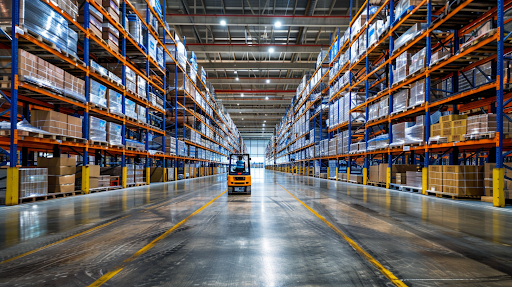
Aisle width is the variable most operators size last and pay for first. Get it wrong and forklifts crawl, picking routes back up, and rack rows get torn out to make space. This blog will walk you through how forklift type, pallet flow, and clearance rules drive sensible warehouse aisle width planning, with the numbers used across Singapore warehouse racking systems projects.
Why aisle width quietly drives everything else
Aisle width rarely makes the headline of a quote. Beam load, upright height, and capacity per bay get the attention. On the floor, aisle width controls forklift cycle time, pallet damage rates, and how many bays actually fit the building.
The relationship between aisle width and storage density runs both ways. Narrow the aisles by 500 mm and an extra row of racking often fits in. Widen them by 200 mm and a counterbalance forklift that was scraping uprights can finally turn cleanly. The right number depends on the truck, not the rack.
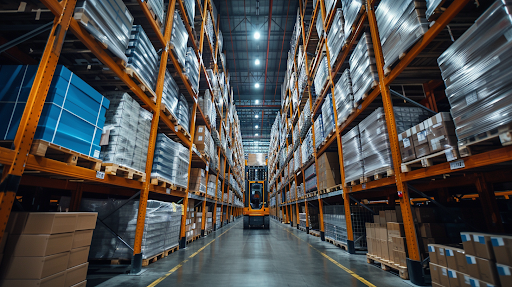
Most SME warehouses in Singapore run on counterbalance or reach trucks. A standard counterbalance unit needs 3.2 m to 3.5 m of clear aisle to turn 90 degrees with a loaded pallet. A reach truck does the same job in 2.6 m to 2.9 m. Building a layout against the wrong number sets up either pallet damage or wasted floor space, sometimes both.
Forklift type sets the floor for aisle width
The forklift fleet is the first input, not the last. Confirm what trucks will operate the warehouse before specifying any beam length, upright depth, or aisle setback.
Counterbalance forklift (3.2 m to 3.5 m)
The counterbalance forklift is the workhorse of loading bays and outdoor yards. It carries the load on forks that extend in front of the front axle, with a counterweight at the rear. That geometry needs space to turn. Sit-down counterbalance trucks rated for 1.5 to 2.5 tonnes need 3.2 m to 3.5 m of clear aisle to handle a 1,200 mm pallet at 90 degrees.
If the warehouse loads pallets straight from receiving to bulk storage in one truck cycle, counterbalance aisles are unavoidable. The trade-off is density. Each extra metre of aisle is roughly two fewer rack rows in a 60 m wide unit.
Reach truck (2.6 m to 2.9 m)
Reach trucks pull the load between the outriggers, which puts the centre of gravity inside the wheel base. That cuts the turning footprint by 600 mm to 800 mm compared with a counterbalance. Most SME pallet racking installations in Singapore are sized around reach truck dimensions because the extra storage density justifies the equipment swap.
A reach truck rated for 1.5 tonnes needs 2.6 m to 2.9 m for a right-angle stack with a standard 1,000 x 1,200 mm pallet. Lift heights of 8 m to 10 m are typical, which makes them the practical pairing with selective pallet racking running 5 to 7 levels high.
Very narrow aisle truck (1.5 m to 1.8 m)
VNA trucks (turret trucks and articulated forklifts) work in guided aisles using floor rails or wire guidance. They do not turn inside the aisle. The mast or forks rotate to put away and retrieve pallets, so the turning radius drops out of the equation.
A VNA layout pushes density up by 30 to 45 percent versus a reach truck warehouse with the same footprint. The trade-off is capital cost and operational rigidity. VNA trucks cost two to three times more than reach trucks, and the aisle width is locked once the guidance is installed. For warehouses planning a very narrow aisle racking system, the throughput model has to justify the investment before the steel goes in.
Hand pallet truck and pedestrian stacker (1.4 m to 2.4 m)
Hand pallet trucks need 1.4 m to 1.6 m for safe two-way passage of a single operator with a loaded pallet. Pedestrian stackers (walkie stackers) need 2.0 m to 2.4 m for right-angle stacking up to 3 m. These aisles only work in lighter operations such as picking zones or back-of-house storage where inventory does not flow through forklifts.

Pallet flow direction changes the math
Single-direction pallet flow is the simplest case. Pallets enter from one end of the aisle and exit at the other. Cycle paths are predictable, and aisle width can be sized purely around turning radius.
Two-way traffic is the complication. If two reach trucks have to pass each other in the same aisle, the minimum width jumps to 4.0 m to 4.5 m. Most SME operations cannot afford that kind of footprint and instead enforce one-way flow with floor markings and pedestrian rules.
Cross-aisles deserve their own number. The main cross-aisle linking work aisles to receiving and shipping has to handle counterbalance trucks moving full pallets at speed. Plan for 4.0 m to 4.5 m of clear cross-aisle, and confirm the geometry against the WSH Council guidance on safe forklift operation.
Drive-in pallet racking changes the math entirely. Forklifts enter the rack itself, so the in-rack lane width matches the truck width plus 100 mm to 150 mm clearance per side. The cross-aisle in front of a drive-in racking system still needs full counterbalance turning room, because the trucks have to align before entering.
Loading bay clearance is the third pinch point. The dock approach should give a counterbalance truck 4.5 m to 5.5 m of clear floor between the bay door and the first rack row. Less than that and full-pallet retrieval into a 40-foot container becomes a multi-shunt operation, which slows turnaround and chips pallet boards.
Common aisle width mistakes that cost money later
Three patterns repeat across SME warehouse projects in Singapore.
Sizing aisles around the cheapest forklift available. A buyer specifies a 2.6 m aisle to maximise rack rows, then realises the operations team prefers counterbalance trucks because they double up for outdoor work. The fix is either a costly truck swap or removing rack rows after installation.
Forgetting pallet overhang. Pallets often sit 50 mm proud of the rack on each side. Combined with mast clearance and operator visibility, that pushes the practical aisle width 100 mm to 200 mm beyond the truck spec sheet. Always size to operating clearance, not nameplate turning radius.
Ignoring how lift height interacts with aisle width. Reach trucks lifting above 7 m need wider aisles for stability under load. A truck rated for 2.6 m at 5 m lift may need 2.8 m at 8 m lift. Confirm the lift-to-aisle curve with the truck supplier before signing the rack drawing. The pallet racking load capacity guide explains how lift height also affects allowable beam loads.
How to plan aisle width in five steps
1. Lock the forklift fleet first
List every truck that will operate the warehouse, including spares and visiting third-party trucks for inbound deliveries. The widest truck sets the minimum cross-aisle width.
2. Confirm pallet sizes and orientation
Pallets stored “stringer in” (1,000 mm leading edge) need different aisle math than pallets stored “stringer out” (1,200 mm leading edge). Singapore warehouses commonly run a mix of 1,000 x 1,200 mm and 1,100 x 1,100 mm pallets, and the racking has to accommodate the worst case.
3. Map pallet flow direction
Mark receiving, putaway, picking, and dispatch on a single floor plan. Single-direction flow allows narrower work aisles. Two-way flow requires width for passing or strict scheduling. The industrial racking system design guide covers how to model flow before drawing rack rows.
4. Add operating clearance, not just turning radius
The truck spec sheet shows the minimum theoretical aisle. Operating aisle adds 100 mm to 200 mm for pallet overhang, operator margin, and safe right-angle stacking. SS EN 15620 and the geometric tolerances published in SEMA’s racking design guidance define the standard clearances accepted across the industry.
5. Stress-test the layout against peak shift volume
A layout that works at 30 pallet movements per hour may seize at 60. Run the planned flow against the peak shift count, not the average. If the model shows trucks queuing at cross-aisles, widen the cross-aisle before construction starts. Retrofitting a wider aisle into a fully populated rack run costs three to five times more than getting it right on day one.
What good aisle planning actually looks like
A well-planned warehouse layout is one where the forklift never waits, the rack never gets clipped, and the cross-aisle clears two trucks at peak. Aisle width is the lever that gets you there. Size it around the truck fleet, the pallet flow, and the operating clearance, and the layout stops fighting the operation.
If you are sizing a new warehouse or retrofitting an existing layout in Singapore, the NTL Storage team can model the truck movement, pallet flow, and rack geometry against your actual operating volumes before any steel is cut.
Frequently Asked Questions
What is the minimum aisle width for a reach truck?
A reach truck rated for 1.5 tonnes typically needs 2.6 m to 2.9 m of clear aisle for right-angle stacking with a 1,000 x 1,200 mm pallet. Lift heights above 7 m require wider aisles for stability, so always confirm the lift-to-aisle curve with the truck supplier before finalising the racking layout.
How wide should a warehouse cross-aisle be?
Cross-aisles should be 4.0 m to 4.5 m wide to allow counterbalance forklifts to move full pallets between work aisles, receiving, and shipping at safe speed. The main aisle linking the loading bay to bulk pallet racking storage should not be sized smaller than the widest truck operating in the warehouse.
What is the difference between VNA aisle width and selective racking aisle width?
Very narrow aisle layouts run at 1.5 m to 1.8 m using turret trucks or articulated forklifts that do not turn inside the aisle. Selective racking with reach trucks runs at 2.6 m to 2.9 m. VNA pushes density up by 30 to 45 percent but locks the warehouse into specific guided trucks and a fixed aisle width.
Does pallet size affect aisle width planning?
Yes. A 1,200 mm pallet stored stringer-in needs different aisle clearance than a 1,100 x 1,100 mm Asian pallet. Most Singapore warehouses run a mix, so racking has to be sized around the worst-case pallet orientation. Pallet overhang of around 50 mm per side also adds to the required operating clearance.
Can I retrofit narrower aisles without changing forklifts?
Only if the existing forklifts can operate at the narrower spec. Counterbalance trucks cannot safely work below 3.2 m. Reach trucks can sometimes work at 2.5 m if lift heights and pallet weights stay within stability limits, but the truck supplier must confirm. Otherwise the fleet has to change before the racking does.